



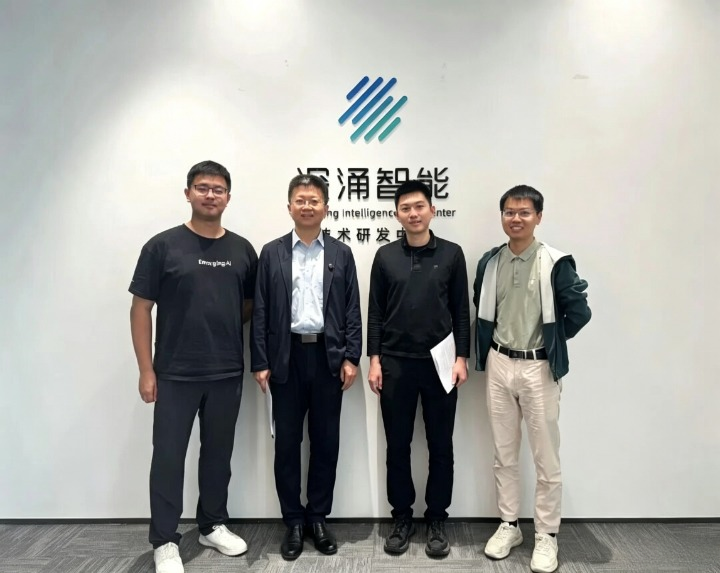
深涌智能作为粤港澳大湾区国家技术创新中心国际总部培育项目,依托深圳清华大学研究院成立自主智能系统工程研发中心,近日正式获批成立。这不仅是对深涌技术路线的高度认可,更为我们解决 AI 落地痛点提供了国家级高水平的产学研阵地。中心由深涌智能 CEO 黄可铖担任中心主任,CTO 黄涛任联合主任,COO 李卓任运营负责人。未来,我们将深度联合顶级高校的科研力量,打通从 “技术突破、工程验证到产业落地” 的全链路闭环。

以全栈自主智能,定义金融智能化新范式
于深圳清华大学研究院成立 “自主智能系统工程研发中心”,旨在加强人工智能前沿领域与金融产业深度融合上的重点战略投入。中心依托深涌智能在底层算力基建、模型推理加速、数据工程与知识体系构建的全栈技术优势,确立了 “高质量数据基座建设+全栈自主智能体系统” 的双轮驱动研发战略。
中心研发重点一
以「全产业链图谱」为核心,打造金融高质量数据基建与知识资产体系
金融智能化的核心壁垒,在于对深层产业逻辑的系统性解构、高质量数据沉淀与知识资产沉淀。我们将研发重心锚定金融全产业链图谱的深度构建与迭代,彻底跳出传统基础数据清洗的局限,以全链路、全维度、全周期为核心目标,搭建覆盖宏观经济周期、中观产业链条、微观交易行为的一体化知识体系。
同时,我们将以全产业链图谱为核心底座,整合另类数据、舆情数据、高频交易数据等多源高质量数据,通过规模化的知识抽取、实体关联、逻辑建模与动态更新,构建标准化、可推演、高时效、可迭代的全域数据资产库。在此基础上,深度打通产业上下游的因果关联、传导路径与周期规律,实现从原始信息到产业逻辑、从静态结构到动态演化的全维度数据治理,持续沉淀高价值、可复用的金融知识资产与高质量因子,为高阶金融智能、自主交易智能体提供最核心、最夯实的数据底座、认知养分与策略原料,筑牢金融 AI 落地的根本根基。
中心研发重点二
以「全产业链图谱」为核心,打造金融高质量数据基建与知识资产体系
金融智能化的核心壁垒,在于对深层产业逻辑的系统性解构、高质量数据沉淀与知识资产沉淀。我们将研发重心锚定金融全产业链图谱的深度构建与迭代,彻底跳出传统基础数据清洗的局限,以全链路、全维度、全周期为核心目标,搭建覆盖宏观经济周期、中观产业链条、微观交易行为的一体化知识体系。
同时,我们将以全产业链图谱为核心底座,整合另类数据、舆情数据、高频交易数据等多源高质量数据,通过规模化的知识抽取、实体关联、逻辑建模与动态更新,构建标准化、可推演、高时效、可迭代的全域数据资产库。在此基础上,深度打通产业上下游的因果关联、传导路径与周期规律,实现从原始信息到产业逻辑、从静态结构到动态演化的全维度数据治理,持续沉淀高价值、可复用的金融知识资产与高质量因子,为高阶金融智能、自主交易智能体提供最核心、最夯实的数据底座、认知养分与策略原料,筑牢金融 AI 落地的根本根基。
中心研发重点二
构建全栈 Multi-Agent 协同系统,实现金融量化工作流从人工驱动到自主智能的跃迁
相较于传统人工经验驱动、依赖固定规则且受限于人类认知边界的交易体系,我们基于完善的数据基建与算力底座,核心攻关全栈 Multi-Agent 协同系统。该系统将突破单一智能体的能力边界,构建具备长效记忆、自主逻辑推演、闭环自我迭代的多层级协同架构,以全栈数据基建为核心认知燃料,实现规模化、自动化的深度认知与决策链路。
智能体集群将基于全产业链图谱与多源数据,自主完成深度研判、逻辑推演与策略优化,全天候多维度开展市场分析与智能决策。我们将以真实业务场景的落地效果为唯一检验标准,推动智能体系统在金融场景的规模化、工程化落地,完成从工具型大模型,到场景原生、自主进化的金融智能系统的范式跃迁,重新定义下一代金融智能的核心能力。

此次研发中心成立,标志着深涌智能正式依托高水平产学研协同平台,开启AI 系统工程能力从实验室走向规模化且有垂直深度的产业应用的关键转型。中心将以深涌智能在底层算力与知识体系的长期技术积淀为核心基石,精准锚定企业级 AI 落地过程中 “稳定性不足、可控性薄弱、成本高昂” 的核心痛点,重点攻坚 “企业级 AIOS 一体化平台” 的研发与验证,致力于构建具备高鲁棒性与强可控性的企业级 AI 基础设施底座:
- 优化计算资源调度:通过高效的算力调度算法与资源弹性管理机制,最大化 GPU 等算力资源的利用效率,从工程层面降低 AI 规模化部署的算力成本,提升稳定性。
- 高质量数据资产体系构建:围绕多源异构数据治理、知识抽取与动态更新,形成标准化、高时效、可复用的高质量数据资产与产业级知识底座,为智能决策提供高质量数据支撑。
- 多智能体协同机制:强化复杂任务下智能体间的协同调度与稳定执行能力,实现规模化、自动化的智能决策闭环。
- 构建全链路AI系统观测体系:突破复杂异构计算环境的监控瓶颈,实现 AI 模型全生命周期的可观测性与精细化运维管理,保障系统运行的确定性。
目前,上述系统级工程能力已重点在金融服务、智能制造等复杂行业场景完成应用验证与技术迭代。接下来将进一步深耕垂直场景,推动 AI 技术完成从 “理论模型验证” 到 “工业级工程化落地” 的质变 ,为技术成果的规模化转化提供坚实的工程底座。
依托国家级平台,构筑自主可控 AI 决策闭环
深圳清华大学研究院自 1996 年成立以来,始终是连接顶尖科研与产业应用的核心桥梁,在新一代信息技术、人工智能等领域拥有完备的产学研协同机制。

粤港澳大湾区国家技术创新中心是国家重点布局建设的三个综合类国家技术创新中心之一, 担负着实施科技创新驱动发展战略、推动落实粤港澳大湾区发展规划的重要使命。国际总部是大湾区国创中心的有机组成部分,定位于解决产业高质量发展面临的重大挑战,组织国际创新资源,联合龙头企业力量,开展有组织科研和有组织转化,共同培育新质生产力。
此次深涌智能依托深圳清华大学研究院成立 “自主智能系统工程研发中心”,正是依托这一强大的平台势能,将极具前沿性的技术研究,迅速投入真实的产业洪流中进行验证与转化。未来,中心将积极参与国家级及省部级科研项目,围绕 “自主可控人工智能” 关键技术持续攻关。
从底层技术架构的持续深耕,到企业级 AI 生产力中枢的构建落地,深涌智能始终以务实创新为底色,坚持技术驱动与产业落地并重。我们坚信,真正助力企业跨越 AI 落地瓶颈,依靠的并非概念与形式,而是对业务场景的深度理解与工程化落地能力。依托本次联合成立的研发中心,我们期望以硬核技术实力、深度行业理解与高效响应能力,成为企业智能化转型路上值得信赖的技术合伙人。
与深涌智能同行,加速 产业AI 落地
凭借全栈一体化AI技术体系,深涌智能可为全球客户提供:
- 释放硬件潜能的AI 推理与算力调度
- 保障数据安全的私有化及混合云部署
- 深入复杂业务链路的定制化多智能体系统
联系我们,获取深涌智能 AI 一体化平台试用或专属落地解决方案,以技术力量助力企业实现智能化转型的关键跨越。

How to Run Large Language Models (LLMs) on GPUs
LLMs (Large Language Models) have caused revolutionary changes in the field of deep learning, especially showing great potential in NLP (Natural Language Processing) and code-based tasks. At the same time, HPC (High Performance Computing), as a key technology for solving large-scale complex computational problems, also plays an important role in many fields such as climate simulation, computational chemistry, biomedical research, and astrophysical simulation. The application of LLMs to HPC tasks such as parallel code generation has shown a promising synergistic effect between the two.
Why Use GPUs for Large Language Models?
GPUs (Graphics Processing Units) are crucial for accelerating LLMs due to their massive parallel processing capabilities. They can handle the extensive matrix operations and data flows inherent in LLM training and inference, significantly reducing computation time compared to CPUs. GPUs are designed with thousands of cores that enable them to perform numerous calculations simultaneously, which is ideal for the complex mathematical computations required by deep learning algorithms. This parallelism allows LLMs to process large volumes of data efficiently, leading to faster training and more effective performance in various NLP tasks and applications.
Key Differences Between GPUs and CPUs
GPUs and CPUs (Central Processing Units) differ primarily in their design and processing capabilities. CPUs have fewer but more powerful cores optimized for sequential tasks and handling complex instructions, typically with a few cores (dual to octa-core in consumer settings). They are suited for jobs that require single-threaded performance and can execute various operations with high control.
In contrast, GPUs are designed with thousands of smaller cores, making them excellent for parallel processing. They can perform the same operation on multiple data points at once, which is ideal for tasks like rendering images, simulating environments, and training deep learning models including LLMs. This architecture allows GPUs to process large volumes of data much faster than CPUs, giving them a significant advantage in handling parallelizable workloads.
How GPUs Power LLM Training and Inference
Leveraging Parallel Processing for LLMs
LLMs leverage GPU architecture for model computation by utilizing the massive parallel processing capabilities of GPUs. GPUs are equipped with thousands of smaller cores that can execute multiple operations simultaneously, which is ideal for the large-scale matrix multiplications and tensor operations inherent in deep learning. This parallelism allows LLMs to process vast amounts of data efficiently, accelerating both training and inference phases. Additionally, GPUs support features like half-precision computing, which can further speed up computations while maintaining accuracy, and they are optimized for memory bandwidth, reducing the time needed to transfer data between memory and processing units.
GPU-Accelerated Inference for Real-time Applications
GPUs enhance the inference of large-scale models like LLMs through strategies such as parallel processing, quantization, layer and tensor fusion, kernel tuning, precision optimization, batch processing, multi-GPU and multi-node support, FP8 support, operator fusion, and custom plugin development. Advancements like FP8 training and tensor scaling techniques further improve performance and efficiency.
These techniques, as highlighted in the comprehensive guide to TensorRT-LLM, enable GPUs to deliver dramatic improvements in inference performance, with speeds up to 8x faster than traditional CPU-based methods. This optimization is crucial for real-time applications such as chatbots, recommendation systems, and autonomous systems that require quick responses.
Key Optimization Techniques for LLMs on GPUs
Quantization and Fusion Techniques for Faster Inference
Quantization is another technique that GPUs use to speed up inference by reducing the precision of weights and activations, which can decrease the model size and improve speed. Layer and tensor fusion, where multiple operations are merged into a single operation, also contribute to faster inference by reducing the overhead of managing separate operations.
NVIDIA TensorRT-LLM and GPU Optimization
NVIDIA’s TensorRT-LLM is a tool that optimizes LLM inference by applying these and other techniques, such as kernel tuning and in-flight batching. According to NVIDIA’s tests, applications based on TensorRT can show up to 8x faster inference speeds compared to CPU-only platforms. This performance gain is crucial for real-time applications like chatbots, recommendation systems, and autonomous systems that require quick responses.
GPU Performance Benchmarks in LLM Inference
Token Processing Speed on GPUs
Benchmarks have shown that GPUs can significantly improve inference speed across various model sizes. For instance, using TensorRT-LLM, a GPT-J-6B model can process 34,955 tokens per second on an NVIDIA H100 GPU, while a Llama-3-8B model can process 16,708 tokens per second on the same platform. These performance improvements highlight the importance of GPUs in accelerating LLM inference.
Challenges in Using GPUs for LLMs
The High Cost of Power Consumption and Hardware
High power consumption, expensive pricing, and the cost of cloud GPU rentals are significant considerations for organizations utilizing GPUs for deep learning and high-performance computing tasks. GPUs, particularly those designed for high-end applications like deep learning, can consume substantial amounts of power, leading to increased operational costs. The upfront cost of purchasing GPUs is also substantial, especially for the latest models that offer the highest performance.
Cloud GPU Rental Costs
Additionally, renting GPUs in the cloud can be costly, as it often involves paying for usage by the hour, which can accumulate quickly, especially for large-scale projects or ongoing operations. However, cloud GPU rentals offer the advantage of flexibility and the ability to scale resources up or down as needed without the initial large capital outlay associated with purchasing hardware.
Cost Mitigation Strategies for GPU Usage
Balancing Costs with Performance
It’s important for organizations to weigh these costs against the benefits that GPUs provide, such as accelerated processing times and the ability to handle complex computational tasks more efficiently. Strategies for mitigating these costs include optimizing GPU utilization, considering energy-efficient GPU models, and carefully planning cloud resource usage to ensure that GPUs are fully utilized when needed and scaled back when not in use.
Challenges of Cost Control in Real-World GPU Applications
Real-world cost control challenges in the application of GPUs for deep learning and high-performance computing are multifaceted. High power consumption is a primary concern, as GPUs, especially those used for intensive tasks, can consume significant amounts of electricity. This not only leads to higher operational costs but also contributes to a larger carbon footprint, which is a growing concern for many organizations.
The initial purchase cost of GPUs is another significant factor. High-end GPUs needed for cutting-edge deep learning models are expensive, and organizations must consider the return on investment when purchasing such hardware.
Optimizing Efficiency: Key Strategies for Success
Advanced GPU Cost Optimization Techniques
Recent advancements in GPU technology for cost control in deep learning applications include vectorization for enhanced data parallelism, model pruning for reduced computational requirements, mixed precision computing for faster and more energy-efficient computations, and energy efficiency improvements that lower electricity costs. Additionally, adaptive layer normalization, specialized inference parameter servers, and GPU-driven visualization technology further optimize performance and reduce costs associated with large-scale deep learning model inference and analysis.
Emerging AI: An Open Source in Optimizing GPU Costs
Emerging AI is a service designed to optimize the deployment, monitoring, and autoscaling of LLMs on multi-GPU clusters. It addresses the challenges of diverse and co-located applications in multi-GPU clusters that can lead to low service quality and GPU utilization. Emerging AI comprehensively deconstructs the execution process of LLM services and provides a configuration recommendation module for automatic deployment on any GPU cluster. It also includes a performance detection module for autoscaling, ensuring stable and cost-effective serverless LLM serving.
The service configuration module in Enova is designed to determine the optimal configurations for LLM services, such as the maximal number of sequences handled simultaneously and the allocated GPU memory. The performance detection module monitors service quality and resource utilization in real-time, identifying anomalies that may require autoscaling actions. Enova’s deployment execution engine manages these processes across multi-GPU clusters, aiming to reduce the workload for LLM developers and provide stable and scalable performance.
Future Innovations in GPU Efficiency
Emerging Technologies for Better GPU Performance
Emerging AI’s approach to autoscaling and cost-effective serving is innovative as it specifically targets the needs of LLM services in multi-GPU environments. The service is designed to be adaptable to various application agents and GPU devices, ensuring optimal configurations and performance across diverse environments. The implementation code for Emerging AI is publicly available for further research and development.
Future Outlook
Emerging technologies such as application-transparent frequency scaling, advanced scheduling algorithms, energy-efficient cluster management, deep learning job optimization, hardware innovations, and AI-driven optimization enhance GPU efficiency and cost-effectiveness in deep learning applications.
Since the initial proposal of the Transformer model by the Google team in the paper “Attention Is All You Need” in 2017, this architecture has become a milestone in the field of Natural Language Processing (NLP). The Transformer has not only excelled in machine translation tasks but also achieved revolutionary progress in many other NLP tasks.

The Transformer architecture takes center stage in Large Language Models (LLMs), designed initially to address sequence transduction problems, namely neural machine translation, capable of converting input sequences into output sequences. Within LLMs, it functions much like a conductor in an orchestra, coordinates and integrates information from different “instruments” (namely various layers of the model) to produce accurate and applicable language output.
Today we will explore the evolution of the Transformer, tracing its development from its initial design to the most advanced models, and highlighting the significant advancements made along the way.
Introduction
The core of the Transformer architecture is the self-attention mechanism, which allows the model to capture relationships between words in the input sequence, enabling it to focus on all parts of the input sequence rather than just local information. This mechanism gives the Transformer a significant advantage in handling long-range dependencies and parallel computing.
Evolution Process
Original Transformer Model
The original Transformer model consists of multiple encoders and decoders, with the encoder responsible for comprehending the input data and the decoder generating the output. The multi-head self-attention mechanism allows the model to process information in parallel, increasing efficiency and accuracy. Additionally, the introduction of positional encoding provides the model with positional information for each element in the sequence, compensating for the lack of sequence order information inherent in the Transformer itself.
The Rise of BERT and Pre-training
The BERT (Bidirectional Encoder Representations from Transformers) model introduced by Google in 2018 is a significant milestone in the NLP field. BERT popularized and refined the concept of pre-training on large text corpora, leading to a paradigm shift in NLP task methods. By considering the context of each word, BERT can achieve unprecedented accuracy on multiple tasks with minimal parameter tuning.
GPT Series Models
The Generative Pre-trained Transformer (GPT) series by OpenAI represents a major advancement in language modeling, focusing on the Transformer decoder architecture for generation tasks. From GPT-1 to GPT-3, each iteration has brought substantial improvements in scale, functionality, and impact on natural language processing.
Innovations in Attention Mechanisms
Researchers have proposed various modifications to the attention mechanism, achieving significant progress with innovations such as sparse attention, adaptive attention, and cross-attention variants. These innovations further enhance the model’s ability to handle different tasks.
Case Studies
Applications of the Transformer architecture include but are not limited to:
· Text Summarization: Utilizing the Transformer model and self-attention mechanism for automatic text summarization, improving the accuracy and efficiency of summaries.
· Question Answering Systems: The application of Transformer models in question answering systems, capturing long-range dependency relationships between questions and texts to provide accurate answers.
· Text Classification: Using Transformer models for text classification, processing large-scale text datasets, and enhancing classification accuracy.
Challenges
Despite the tremendous success of the Transformer architecture, it faces efficiency issues when processing long text sequences. The quadratic complexity due to each token’s interaction with every other token leads to exponential growth in computational and memory demands as the context length increases. To address this issue, researchers have proposed sparse attention mechanisms and context compression techniques, which often come at the cost of performance and may result in the loss of key contextual information.
Future Prospects
- Exploring more efficient attention mechanisms, such as sparse attention and local-global hybrid attention, to enhance model performance and efficiency in long-text processing tasks.
- Designing parameter initialization and optimization strategies tailored to Transformer models to accelerate the training process and improve training stability and robustness.
- Developing new model architectures like Mixture-of-Experts to further expand model scale while maintaining computational efficiency.
- Integrating Transformer with other types of neural networks, such as convolutional neural networks and recurrent neural networks, to leverage the strengths of different architectures and enhance model performance.
As research continues, we can anticipate further innovations that will expand the capabilities and applications of these powerful models across various domains. Concurrently, new architectures and ideas are emerging, potentially providing new momentum and direction for the development of artificial intelligence.
Imagine you are standing in a grand library, where the books hold centuries of human thoughts. But you are tasked with a singular mission: find the one book that contains the precise knowledge you need. Do you dive deep and explore from scratch? Or do you pick a book that’s already been written, and tweak it, refining its wisdom to suit your needs?
This is the crossroads AI business and developers face when deciding between pre-training and fine-tuning. Both paths have their own fun and challenges. In this blog, we explore what lies at the heart of each approach: definitions, pros and cons, then the strategy to choose wisely.
Introduction
What is Pre-Training?
Pre-training refers to the process of training an AI model from scratch on a large dataset to learn general patterns and representations. Typically, this training happens over many iterations, requiring substantial computational resources, time, and data. The model, in essence, develops a deep understanding of the general features within the data, and can be used for inference at convenience.
The outcome of pre-training is usually a relatively stable, effective model adapted to the application scenarios as designed. It could be specified on a certain data domain and particular tasks, or applicable to general usage. Typical examples of pre-trained models include large language models like ChatGPT, Llama, Claude; or large vision models such as CLIP.
What is Fine-Tuning?
The fine-tuning process usually takes a pre-trained model and adjusts it to perform a specific task. This involves updating the weights of the pre-trained model using a smaller, task-specific dataset. Since the model already understands general patterns in the data (from pre-training), fine-tuning further improves it to specialize in your particular problem while reusing the knowledge from pre-training.
This process is often quicker and less resource-intensive than pre-training, as the pre-trained model already captures a wide range of useful features. And more importantly, the task-specific dataset is usually small. Fine-tuning is widely used especially for domain specialization, recent developments include finance, education, science, medicine, etc.
A Little More on the History
The liaison between fine-tuning and pre-training does not emerge in the era of LLMs. In fact, the development of deep learning brings about a perspective of these two “routines”. We can view the brief history of deep learning as three stages with respect to pre-training and fine-tuning.
- First stage (20thcentury): supervised fine-tuning only
- Second stage (early 21stcentury to 2020): supervised layer-wise pretraining + supervised fine-tuning
- Third stage (2020 to date): unsupervised layer-wise pretraining+ supervised fine-tuning
Indeed as we define above, especially for the recent foundation models, the pre-training phase on large datasets follows unsupervised fashion, i.e. for general knowledge, then the fine-tuning phase tailors the model into specific applications. However before this stage, reducing the horizon of the scale, we are already using supervised pretraining and fine-tuning for typical deep learning tasks.
Pros and Cons
If pre-training is the great journey across the general knowledge, then fine-tuning is the delicate craft of specialization. We promised fun and challenges for each approach, now it’s time to check them out.
Pros of Pre-Training
- Full control over the model: Pre-training gives you complete flexibility in designing the architecture and learning objectives, enabling the model to suit your specific needs.
- Task-generalized learning: Since pre-trained models learn from vast, diverse datasets, they develop a rich and generalized understanding that can transfer across multiple tasks.
- Potential for state-of-the-art performance: Starting from scratch allows for new innovations in the model structure, potentially pushing the boundaries of what AI can achieve.
Cons of Pre-Training
- High resource cost: Pre-training is computationally intensive, often requiring large-scale infrastructure (like cloud servers or specialized hardware) and extensive time.
- Vast amounts of data required: For meaningful pre-training, you need enormous datasets, which can be difficult or expensive to acquire for niche applications.
- Extended development time: Pre-training models from scratch can take weeks or even months, significantly slowing down the time to market.
The pros and cons of fine-tuning are straightforward by flipping the coin. In addition to that, we also mention a few nuances.
Pros of Fine-Tuning
- Straightforward:lower resource requirements, less strict data requirement.
- Faster to market: This becomes critical if you are running an AI business and would like to take one step faster than the competitors
- Flexible with target domains and tasks.Your AI applications and business may vary with time, or simply require a refinement of functionality. Fine-tuning makes that much easier.
Cons of Fine-Tuning
- Straightforward:less architectural flexibility, potential suboptimal performance.
- Model bias inheritance: Pre-trained models can sometimes carry biases from the datasets they were trained on. If your fine-tuned task is sensitive to fairness or requires unbiased predictions, this could be a concern. In general, the quality of fine-tuned models depends more or less on the pre-trained model.
When to Choose Fine-tuning
Fine-tuning is ideal when you want to leverage the power of large pre-trained models without the overhead of training from scratch. It’s particularly advantageous when your problem aligns with the general patterns already learned by the pre-trained model but requires some degree of customization to achieve optimal results. We raise several factors, with priority arranged in order:
- Limited resources: Either computational power or the dataset, if acquiring the resources is hard, fine-tuning a pre-trained model is more realistic.
- Sensitive timeline: Fine-tuning is mostly faster than pre-training, not just because of training from scratch. There are always risks that pre-training is sub-optimal and requires further refinement on the model architectures etc.
- Not necessarily the best model: If the performance requirements are not SOTA, but just a reliable, stable application of your foundation model, then fine-tuning is usually enough to achieve the goal. But it is considered much harder to beat all other models just by fine-tuning.
- Leverage existing frameworks: If your application fits well within existing frameworks (such as system compatibility), fine-tuning offers a simpler, more efficient solution.
Your Product’s Role
Inference acceleration refers to techniques that optimize the speed and efficiency of model predictions once the model is trained or fine-tuned. Whichever approach you choose, a faster inference time is always beneficial, both in the development stage and on market. We mention one major factor that the impact of inference acceleration on fine-tuning is more immediate.
- A Matter of Priority: During pre-training, the model’s complexity and computational demands are very high, and the primary concern is optimizing the learning process. The fine-tuning process, on the other hand, will soon move forward to the evaluation or deployment phase, when inference acceleration saves significant resources.
Inference Process of LLM
LLMs, particularly decoder-only models, use auto-regressive method to generate output sequences. This method generates tokens one at a time, where each step in the sequence requires the model to process the entire token history—both the input tokens and previously generated tokens. As the sequence length increases, the computational time required for each new token grows rapidly, making the process less efficient.
Inference Acceleration Methods
- Data-level acceleration: improve the efficiency via optimizing the input prompts (i.e., input compression) or better organizing the output content (i.e., output organization). This category of methods typically does not change the original model.
- Model-level acceleration: design an efficient model structure or compressing the pre-trained models in the inference process to improve its efficiency. This category of methods (1) often requires costly pre-training or a smaller amount of fine-tuning cost to retain or recover the model ability, and (2) is typically lossy in the model performance.
- System-level acceleration: optimize the inference engine or the serving system. This category of methods (1) does not involve costly model training, and (2) is typically lossless in model performance. The challenge is it also requires more efforts on the system design.
An Example of System-level Acceleration: Emerging AI
Emerging AI falls into the system-level acceleration, with a focus on GPU scheduling optimization. It is an open-source service for LLM deployment, monitoring, injection, and auto-scaling. Here are the major technical features and values:
- Automatic configuration recommendation.
- Real-time performance monitor.
- Stable, efficient and scalable. Increase resource utilization by over 50%and enhance comprehensive GPU memory utilization from 40% to 90%.

The figure above shows the components and functionalities of Emerging AI. For more details we refer to the Github repo and the official website of Emerging AI.
Conclusion
Choosing between fine-tuning and pre-training, by the end of day, depends on your specific project’s needs, resources, and goals. Fine-tuning is the go-to option for most businesses and developers who require fast, cost-effective solutions. On the other hand, pre-training is the preferred approach when developing novel AI applications that require deep customization, or when working with unique, domain-specific data. Though pre-training is more resource-intensive, it can lead to state-of-the-art performance and open the door to new innovations.
For practical concerns, most applications would favor inference acceleration techniques during pre-training and fine-tuning stages, especially for real-time predictions or deployment on edge devices. Data and model-level acceleration are more studied in the academic field, while system-level acceleration has more immediate effectiveness. We hope the content in this blog helps with your choice for your AI applications.
Introduction
Welcome to the future, where artificial intelligence (AI) is not just a buzzword but an accessible reality for innovators and entrepreneurs across the globe. The realm of AI applications is vast, ranging from simple chatbots to complex predictive analytics systems. But how does one take the first steps towards building an AI application?
In this guide, we’ll walk through the pivotal phases of crafting your AI application, highlight the tools you’ll need, and offer insights to set you on the path to AI success. Whether you’re a seasoned developer or a curious newcomer, this guide promises to unravel the mysteries of AI development and put the power of intelligent technology in your hands.
Creating an AI Application
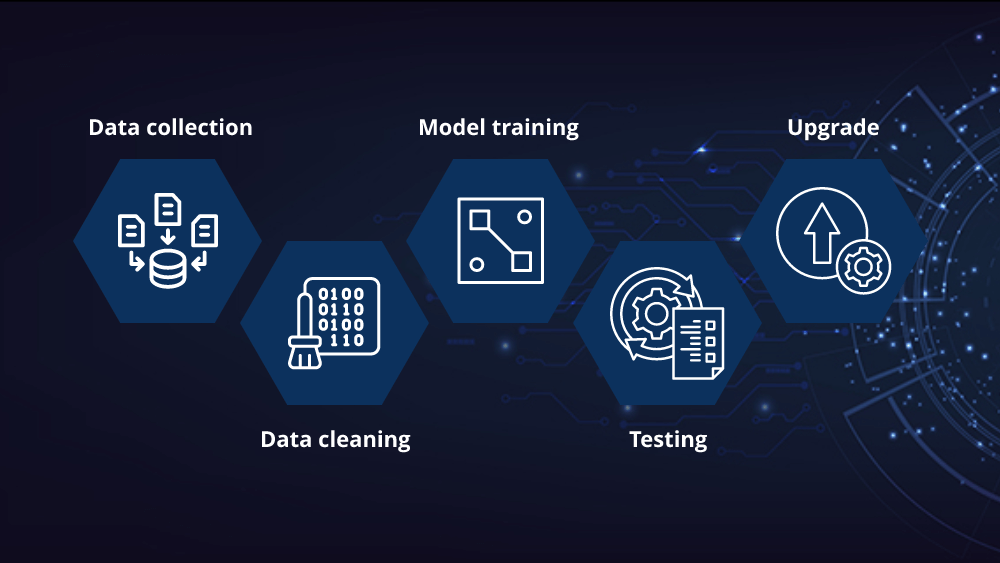
Creating an AI application is an exciting venture that requires careful planning, a clear understanding of objectives, and the right technical skills and resources. Here’s a step-by-step guide to help you get started:
- Define Your ObjectiveDetermine what problem you want to solve with your AI application.Identify the needs of your target users and how your AI solution will address those needs.
- Conceptualize the AI ModelDecide on the type of AI you want to create. Will it involve natural language processing, computer vision, machine learning, or another AI discipline?Sketch out a high-level design of how the model will work, its inputs and outputs, and the user interactions.
- Gather Your DatasetCollect relevant data that your AI model will learn from. The quality and quantity of data can significantly impact the accuracy and performance of your AI application.Ensure that you have the right to use the data and that it’s free of biases to the best of your ability.
- Choose Your Tools and TechnologiesSelect programming languages that are commonly used for AI, such as Python or R.Choose appropriate AI frameworks and libraries, like TensorFlow, PyTorch, Keras, or scikit-learn.
- Develop a PrototypeStart coding your AI model based on the frameworks and datasets you’ve selected.Develop a minimum viable product (MVP) or prototype to test the feasibility of your concept.
- Train and Test Your ModelUse machine learning techniques to train your AI model with your dataset.Test your AI model rigorously to evaluate its performance, accuracy, and reliability.
- Incorporate FeedbackGather feedback by testing your prototype with potential end-users.Make iterative improvements based on the feedback and continue refining your AI model.
- Ensure Ethical Considerations and ComplianceConsider the ethical implications of your AI application and ensure that it complies with relevant AI ethics guidelines and regulations.Include privacy measures and data security to protect user information.
- Deploy the ApplicationChoose a cloud platform or in-house servers to deploy your AI application.Ensure that you have the appropriate infrastructure to support the AI application’s computational and storage needs.
- Monitor and MaintainAfter the deployment, monitor how the application performs in the real world.Set up processes for ongoing maintenance, updates, and performance tuning.
- Scale Your AI ApplicationAs your user base grows and your application proves successful, consider scaling your infrastructure.Explore possibilities for expanding your AI application’s features and reach.
Throughout this process, it may be beneficial to collaborate with AI experts, data scientists, and developers, especially if you’re new to the field of artificial intelligence. Remember that creating a successful AI application is not just about technical excellence; it’s also about understanding and delivering value to users in a responsible and ethical way.
Tools and Software options that Can Assist You
Data Collection and Processing:
Web Scraping Tools: Octoparse, Import.io
Data Cleaning Tools: OpenRefine, Trifacta Wrangler
Programming Languages:
Python: Widely used for AI due to libraries like NumPy, Pandas, and a supportive community.
R: Great for statistical analysis and data visualization.
AI Frameworks and Libraries:
TensorFlow: An end-to-end open-source platform for machine learning.
PyTorch: An open-source machine learning library based on the Torch library.
Keras: A high-level neural networks API, written in Python and capable of running on top of TensorFlow, CNTK, or Theano.
scikit-learn: A Python library for machine learning and data mining.
AI Development Platforms:
Google AI Platform: Offers a managed service for deploying ML models.

IBM Watson: Hosts a suite of AI tools for building applications.
Microsoft Azure AI: A collection of services and infrastructure for building AI applications.
Data Storage and Computation:
Cloud Services: AWS, Google Cloud Platform, Microsoft Azure
Big Data Platforms: Apache Hadoop, Apache Spark
Data Visualization:
Tableau: A powerful business intelligence and data visualization tool.
PowerBI: A business analytics service by Microsoft.
Version Control:
Git: Widely used for code version control.
GitHub/GitLab: Online platforms that provide hosting for software development and version control using Git.
Machine Learning Model Training and Evaluation:
MLflow: An open-source platform for the machine learning lifecycle.
Weights & Biases: Tools for tracking experiments in machine learning.
Deployment and Monitoring:
Emerging AI: An autoscaled scheduling service towards stable and economical serverless LLM serving. Automate deployment processes for efficient LLM service management without manual intervention.
Docker: A tool designed to make it easier to create, deploy, and run applications by using containers.
Kubernetes: An open-source system for automating deployment, scaling, and management of containerized applications.
Prometheus & Grafana: For monitoring deployed applications and visualizing metrics.
Ethics and Compliance:
AI Fairness 360: An extensible open-source toolkit for detecting and mitigating algorithmic bias.
Collaboration and Project Management:
JIRA: An agile project management tool.
Slack: For team communications and collaboration.
These tools serve different aspects of the AI development lifecycle, from planning and building models to deploying and monitoring your application. It’s important to choose the right set tools that match the specific requirements of your AI project and your team’s skills.
Conclusion
Congratulations on completing your explorative expedition into the world of AI application development. By now, you should have a road map etched in your mind, punctuated by the landmarks of defining your project’s goals, selecting the appropriate tools, training your model, and ultimately, watching your AI solution come to life. The journey might seem arduous, marked with challenges and the need for continual learning, but the rewards are equally great—bringing forth an application that harnesses the power of AI to solve real-world problems.
Remember, your journey doesn’t end with deployment; the iterative process of refining your application based on user feedback and advancing technology is what will keep your AI application not just functional but formidable. So venture forth with confidence, knowing you are now armed with the knowledge to transform the seeds of your AI aspirations into the fruits of innovation. Keep innovating, keep iterating, and let your AI application be a testament to the intelligence and ingenuity you possess.
- Introduction
- Creating an AI Application
- Tools and Software options that Can Assist You
- Data Collection and Processing:
- Programming Languages:
- AI Frameworks and Libraries:
- AI Development Platforms:
- Data Storage and Computation:
- Data Visualization:
- Version Control:
- Machine Learning Model Training and Evaluation:
- Deployment and Monitoring:
- Ethics and Compliance:
- Collaboration and Project Management:
- Conclusion
Introduction
AI’s voracious appetite for data and its need for powerful computational prowess are driving an unprecedented demand for infrastructure that surpasses traditional setups. Enter data centers: the beating heart of the digital world and the silent engines powering the AI revolution.
Data centers have transcended beyond their initial roles as mere repositories of information. They have evolved into dynamic and incredibly sophisticated centers of computation, powering not just enterprise-level IT operations but also the complex algorithms that AI systems demand. These facilities, with their racks of humming servers and sprawling webs of networking cables, are critical in teaching machines how to learn, analyze, and act.
This blog casts a spotlight on the symbiotic relationship between AI and data centers, exploring how this partnership is critical not only to the present state of AI but also to its future horizons. The journey will walk through history, the demanding infrastructure requirements, the operational efficiencies, the pressing energy concerns, and real-world case studies that underline the synergy of data centers and AI.
Historical Context of Data Centers and Computing
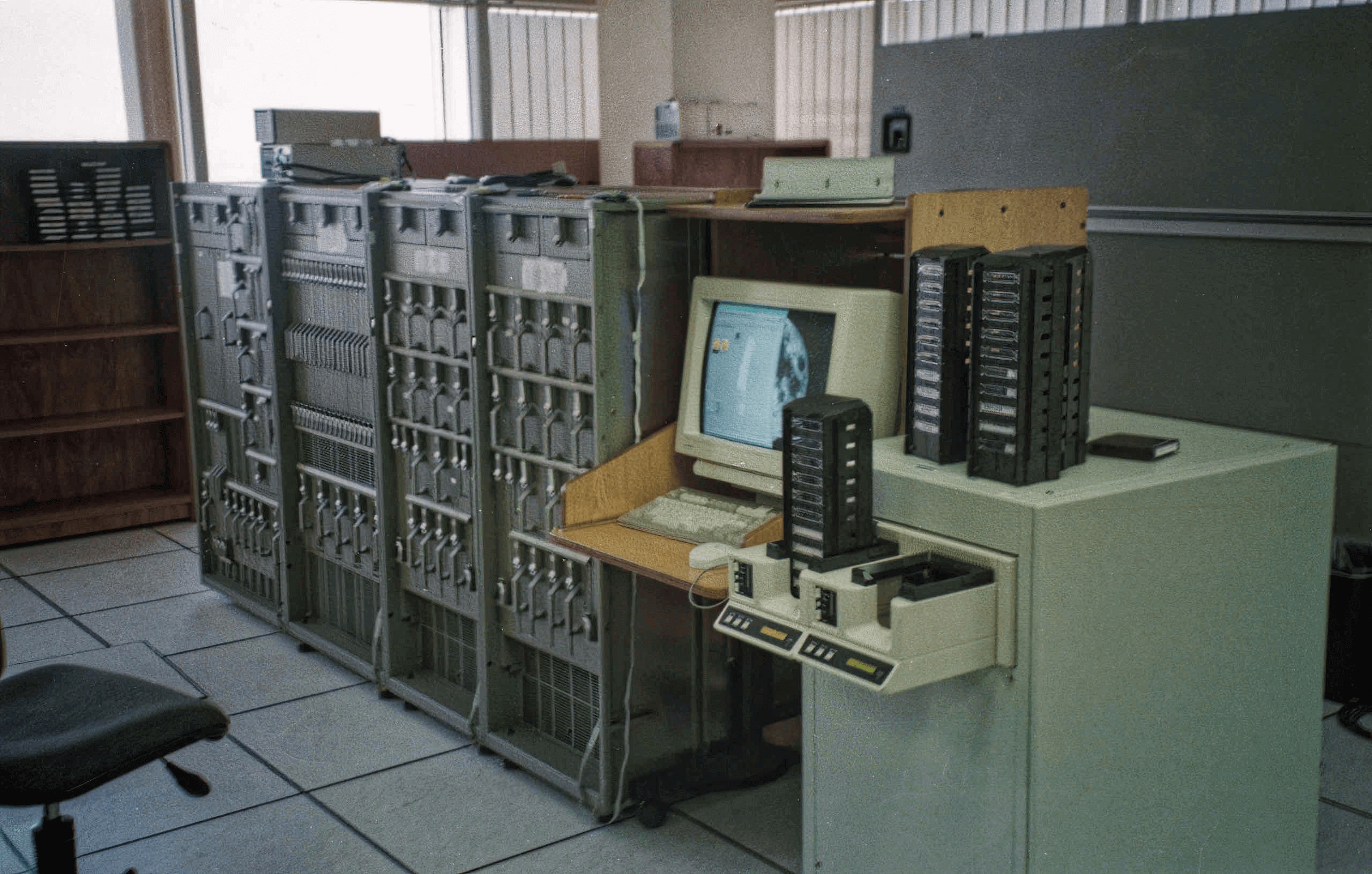
Before we can fully appreciate the role of data centers in the AI era, we must look back at their genesis and evolution. Initially, data centers were conceived as large rooms dedicated to housing the mainframe computers of the 20th century. These were substantial machines that required significant space and a controlled environment. Over time, as technology advanced, so too did the design and operation of data centers. They became repositories for servers that stored and managed the burgeoning volumes of data the internet age brought forth.
The advent of cloud computing further redefined data centers, transforming them from static storage facilities to dynamic, networked systems essential for delivering a range of services over the internet. They adapted to support a multitude of applications, web hosting, and data analytics, enabling businesses and consumers to leverage powerful computing resources remotely.
The progression from mere data storage to complex computing hubs is inextricably linked with advances in computer technology. As processors shrank in size but expanded in capability, the concentration of computing power within data centers increased. The efficiencies gained in processing, storage, and networking paved the way for today’s highly interconnected and cloud-dependent world. With these advances, data centers have become agile support systems for a variety of computing needs, including the computationally intensive tasks of AI.
As the digital revolution unfolded, data centers evolved to become not just keepers of information but also sophisticated nerve centers of computational activity. They are now poised at the frontier of the AI revolution, offering the infrastructure that is indispensable to machine learning’s progression.
The retrospect into the past lays a foundation for understanding the critical transformation of data centers from their origin to the present day—a transformation that has mirrored the trajectory of computing itself. Our next sections will delve into the synergistic relationship between AI and these evolved data centers—one that is vital for powering AI’s future.
The Symbiosis between AI and Data Centers
Catalyzing AI’s Operating Power
The growth of artificial intelligence has been inextricably linked to the evolution of data center capabilities. Powering AI requires more than just strong algorithms; it necessitates an infrastructure capable of handling vast amounts of data and lightning-fast computations. Within the controlled environments of modern data centers, AI has found the fertile ground needed for its complex workloads, all thanks to high-performance computing systems that are the linchpin of AI operations.
Data Centers: AI’s Brain and Brawn
In turn, the advancement and widespread implementation of artificial intelligence have profoundly influenced the architectural design and operational procedures of data centers. Through robust analytics and pattern recognition, AI bolsters the efficiency and reliability of data center operations, enhancing everything from workload distribution to energy use. The alignment of AI’s growth with these technological meccas ensures that as AI models become more sophisticated, data center designs continue to adapt and advance in response.
The Reciprocal Evolution
The data center and AI advancement cycle is reciprocal—data centers provide AI the environment it needs to flourish, while AI continually redefines what is required of that environment. As we witness enterprises like Google apply AI to optimize data center energy efficiency or Amazon Web Services (AWS) offer accessible machine learning services through its vast cloud infrastructure, this intertwined progression becomes increasingly evident. AI and data centers are not just growing side by side; they are co-evolving, united by a vision of a smarter future.
Refining with AI’s Own Tools
Perhaps one of the most intriguing aspects of this symbiosis is that AI has begun to refine the very data centers it relies on. Machine learning algorithms now predictively manage infrastructure load and maintenance, turning data centers into self-optimizing entities. Such applications exemplify the dynamic potential of AI to revitalize the operations within data centers, ensuring they remain at the forefront of technological innovation, ready to power AI’s relentless advancement.
There are several AI tools and technologies that have been instrumental in refining data center operations. Here are some examples:
Google’s DeepMind AI for Data Center Cooling
Google has applied its DeepMind machine learning algorithms to the problem of energy consumption in data centers. Their system uses historical data to predict future cooling requirements and dynamically adjusts cooling systems to improve energy efficiency. In practice, this AI-powered system has achieved a reduction in the amount of energy used for cooling by up to 40 percent, according to Google.
Emerging AI for Computing Power Management
The Emerging AI computing power management platform is a multi-tenant platform
solution for computing power cluster management, designed to optimize and automate the allocation, scheduling and management of computing resources.
The platform enables private cloud management, multi-GPU cloud management and GPU cluster deep observation.
NVIDIA’s AI Platform for Predictive Maintenance
NVIDIA has developed AI platforms that integrate deep learning and predictive analytics to perform predictive maintenance within data centers. These tools analyze operational data in real-time to predict hardware failures before they happen, significantly reducing downtime and maintenance costs.
IBM Watson for Data Center Management
IBM’s Watson uses AI to proactively manage IT infrastructure. By analyzing data from various sources within the data center, Watson can identify trends, anticipate outages, and optimize workloads across the data center environment, thereby enhancing operational efficiency and resilience.
Infrastructure: The Backbone of AI Operations
A New Class of Hardware
Data centers have become the proving grounds for AI’s most demanding workloads, reshaping the landscape of computational hardware. Cutting-edge GPUs are now the mainstay in these environments, accelerating complex mathematical computations at the core of machine learning tasks. With dedicated AI processors, such as Google’s TPUs, data centers are pushing beyond traditional computation limits, vastly improving the efficiency and speed of AI training and inferencing phases.
High-Speed Networking: The Connective Tissue
None of this computational power could be fully harnessed without advancements in networking technology. High-speed networks within data centers facilitate the rapid transmission of data, crucial for collaborative AI processing. Technological marvels like NVIDIA’s Mellanox networking solutions exemplify the significant leaps made in ensuring data centers can operate at the speed AI demands.
Advances in Storage: The Data Storehouses
AI’s insatiable demand for data necessitates not merely large storage capacities but also swift data retrieval systems. Innovations in solid-state drive technology and software-defined storage have transformed data centers into highly efficient data storehouses, capable of feeding AI models with the necessary data volumes at unprecedented speeds.
Conclusion
The intertwining of AI and data centers marks a pivotal shift in our digital epoch. Data centers, the once silent sentinels of data and servers, have evolved into the lifeblood of AI’s advancement, offering the computational might and data processing prowess necessary for AI to thrive. The transformative influence of AI, in turn, is streamlining these hubs of technology into smarter, more efficient operations.
Introduction
The digital age has been marked by remarkable independent advancements in both Artificial Intelligence (AI) and cloud computing. However, when these two titans of tech join forces, they give rise to a synergy potent enough to fuel an entirely new wave of technological innovation. This convergence is not just enhancing capabilities in data analytics and storage solutions; it is reimagining how we interact with and derive value from technology.
The Synergy of AI and Cloud Computing
The unification of AI and cloud computing is no mere melding; it is an orchestrated fusion of strengths where each technology amplifies the capabilities of the other. Cloud computing presents an almost boundless arena for AI operations, granting access to on-demand computing power and expansive data storage possibilities. This environment is primordial for the growth of AI, which thrives on data and requires significant computational resources to evolve.

Enabling Scalability and Accessibility
The cloud provides a scalable infrastructure that can grow with the demands of AI algorithms. This elasticity means that as AI models become more complex or as datasets expand, the cloud can adapt with additional resources. Startups to large enterprises can leverage this capability, entering arenas that were once dominated by tech giants with significant on-premise resources. Accessibility is another key boon, with cloud services democratizing AI by offering high-level compute resources remotely to anyone with internet access.
Advancements in Machine Learning Platforms
Cloud providers have recognized the necessity of specialized platforms for machine learning and AI. For instance, services such as Google Cloud AI, Amazon SageMaker, and Microsoft Azure Machine Learning provide integrated environments for the training, deployment, and management of machine learning models. These services offer pre-built algorithms and the ability to create custom models, significantly reducing the time and knowledge barrier for businesses to incorporate AI solutions.
Data Management and Analytics at Scale
AI’s insatiable appetite for data pairs perfectly with the cloud’s solution to storage. Cloud platforms can effectively manage vast datasets, making it feasible to store and process the big data which AI systems analyze. Furthermore, AI enhances cloud capabilities by introducing analytics and machine learning directly into the data repositories, allowing for more advanced data processing and extraction of insights.
Intelligent Automation and Resource Optimization
AI introduces smart automation of cloud infrastructure management, optimizing resource usage without human intervention. Algorithms predict resource needs, automatically adjusting capacity, and ensuring efficient operation. This not only decreases costs but also improves the performance of hosted applications and services.
Case Studies: Successful Convergence in Action
The convergence of AI and cloud computing has led to successful implementations across various sectors:
Healthcare Delivery and Research
In healthcare, Project Baseline by Verily (an Alphabet company) is a stellar example. The initiative leverages cloud infrastructure for an AI-driven platform that collects and analyzes vast amounts of health-related data. This convergence enables predictive analytics for disease patterns and personalizes patient care protocols, translating into tangible improvements in patient outcomes.

Retail and Consumer Insights
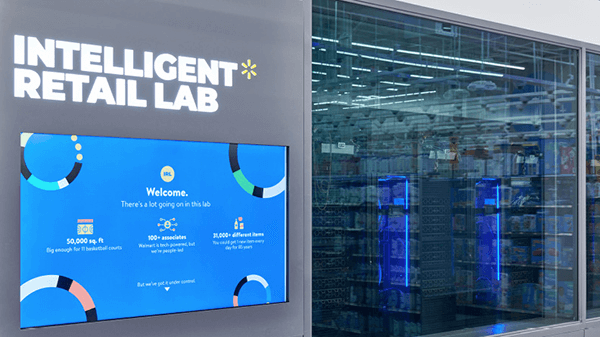
In the retail space, Walmart harnesses cloud-based AI to refine logistical operations, manage inventory, and personalize shopping experiences for customers. Through their data analytics and machine learning tools, Walmart can predict shopping trends and optimize supply chains, reducing waste and improving customer satisfaction.
Financial Services and Risk Management
JPMorgan Chase has turned to the cloud to bolster its AI capabilities for real-time fraud detection. Their AI models, hosting complex algorithms on cloud platforms, scan transaction data to identify potential threats, significantly reducing the occurrence of false positives and enhancing the security of client assets.These cases underscore the powerful impact of AI and cloud computing’s convergence on operational efficiency, user experience, and outcome-driven strategies. As organizations continue to realize the benefits of this collaboration, it’s becoming increasingly clear that the duo of AI and cloud computing stands at the heart of the next frontier in digital transformation.
Challenges and Potential Solutions
The merger of AI and cloud computing is paving the way for a smarter technology landscape. However, it’s not without its share of challenges that require strategic solutions:
Data Privacy and Governance
As data becomes more centralized in the cloud and AI models more nuanced in their data requirements, privacy concerns escalate. Solutions like federated learning allow AI model training on decentralized data, enhancing user privacy without compromising the dataset’s utility. Additionally, implementing stronger data governance and privacy laws aligned with technological advances can provide a structured approach to maintaining user trust.
Securing AI and Cloud Platforms
Securing the infrastructure underpinning AI and the cloud is critical. This means deploying advanced cybersecurity measures such as AI-driven threat detection systems, end-to-end encryption for data in transit and at rest, and multi-factor authentication. Regular security assessments and adherence to compliance standards like GDPR or HIPAA for specific industries can fortify the AI and cloud ecosystem against cyber threats.
Tackling the Skills Shortage
The sophisticated nature of AI and the expansive scope of cloud computing creates a high demand for specialized talent. Companies can forge partnerships with academic institutions to create targeted curricula that meet industry needs. Investing in continuous employee development through workshops and certifications can also help mitigate the skills gap and empower existing workforce members to adapt to new roles necessitated by AI and cloud technology.
Future Prospects
As the fusion between AI and cloud computing strengthens, the horizon of digital innovation expands:
IoT and AI: Smarter Devices Everywhere
The Internet of Things (IoT) stands to benefit immensely from AI and cloud computing, transitioning from simple connectivity to intelligent, autonomous operations. AI can be leveraged to process and analyze data collected by IoT devices to facilitate real-time decisions, while cloud platforms ensure global accessibility and scalability for IoT systems.
Amplifying Edge Computing
Edge computing is set to revolutionize how data is processed by bringing computation closer to the source of data creation. The convergence with AI allows for smarter edge devices that can process data on-site, reducing latency and reliance on centralized data centers. Cloud services come into play by providing management and orchestration layers for these distributed networks.
Building the Foundations of Smart Cities
Smart cities stand as testament to the potential of AI and cloud collaboration. They use AI’s analytical power and the cloud’s vast resource pool to optimize urban services, from traffic management to energy distribution. As smart cities evolve, they’ll likely become more responsive and adaptive, creating urban environments that are not only interconnected but also intelligent.In this landscape of emerging opportunities, businesses must pivot to embrace a future where AI and cloud computing no longer function as standalone tools, but as integrated components of a comprehensive tech ecosystem, propelling innovation at the speed of thought.
A General Guide to Deploying an LLM
- Infrastructure Preparation:
- Choose a deployment environment: local servers, cloud services (like AWS, GCP, Azure), or hybrid.
- Ensure that you have the requisite computational resources: CPUs, GPUs, or TPUs, depending on the size of the LLM and expected traffic.
- Configure networking, storage, and security settings according to your needs and compliance requirements.
- Model Selection and Testing:
- Select the appropriate LLM (GPT-4, BERT, T5, etc.) for your use-case based on factors like performance, cost, and language support.
- Test the model on a smaller scale to ensure it meets your accuracy and performance expectations.
- Software Setup:
- Set up the software stack needed for serving the model, including machine learning frameworks (like TensorFlow or PyTorch), and application servers.
- Scaling and Optimization:
- Implement load balancing to distribute the inference requests effectively.
- Apply optimization techniques like model quantization, pruning, or distillation to improve performance.
- API and Integration:
- Develop an API to interact with the LLM. The API should be robust, secure, and have rate limiting to prevent abuse.
- Integrate the LLM’s API with your application or platform, ensuring seamless data flow and error handling.
- Data and Privacy Considerations:
- Implement data management policies to handle the input and output securely.
- Address privacy laws and ensure data is handled in compliance with regulations such as GDPR or CCPA.
- Monitoring and Maintenance:
- Set up monitoring systems to track the performance, resource utilization, and health of the deployment.
- Plan for regular maintenance, updates to the model, and the software stack.
- Automation and CI/CD:
- Implement continuous integration and continuous deployment (CI/CD) pipelines for automated testing and deployment of changes.
- Automate scaling, using cloud services’ auto-scaling features or orchestration tools like Kubernetes.
- Failover and Redundancy:
- Design the system for high availability with redundant instances across zones or regions.
- Implement a failover strategy to handle outages without disrupting the service.
- Documentation and Training:
- Document your deployment architecture, API usage, and operational procedures.
- Train your team to troubleshoot and manage the LLM deployment.
- Launch and Feedback Loop:
- Soft launch the deployment to a restricted user base, if possible, to gather initial feedback.
- Use feedback to fine-tune performance and usability before a wider release.
- Compliance and Ethics Checks:
- Conduct an audit for compliance with ethical AI guidelines.
- Implement mechanisms to monitor biased outputs or misuse of the model.
Deploying an LLM is not a one-time event but an ongoing process. It’s essential to keep improving and adapting your approach based on new advancements in technology, changes in data privacy laws, and evolving business requirements.
Best Practices for Monitoring the Performance of an LLM After Deployment
After deploying a Large Language Model (LLM), monitoring its performance is crucial to ensure it operates optimally and continues to meet user needs and expectations. Here are some best practices for monitoring the performance of an LLM post-deployment:
- Establish Key Performance Indicators (KPIs):
- Define clear KPIs that align with your business objectives, such as response time, throughput, error rate, and user satisfaction.
- Application Performance Monitoring (APM):
- Utilize APM tools to monitor application health, including latency, error rates, and uptime to quickly identify issues that may impact the user experience.
- Infrastructure Monitoring:
- Track the utilization of computing resources like CPU, GPU, memory, and disk I/O to detect possible bottlenecks or the need for scaling.
- Monitor network performance to ensure data is flowing smoothly between the model and its clients.
- Model Inference Monitoring:
- Measure the inference time of the LLM, as delays could indicate a potential problem with the model or infrastructure.
- Log Analysis:
- Collect and analyze logs to gain insights into system behavior and user interactions with the LLM.
- Ensure logs are structured to facilitate easy querying and analysis.
- Anomaly Detection:
- Implement anomaly detection systems to flag any deviations from normal performance metrics. This could indicate an issue that requires attention.
- Quality Assurance:
- Continuously evaluate the accuracy and relevance of the LLM’s outputs. Set up automated testing or use human reviewers to assess quality.
- User Feedback:
- Collect and analyze user feedback for qualitative insights into the LLM’s performance and user satisfaction.
- Integrate mechanisms for users to report issues with the model’s responses directly.
- Automate Incident Response:
- Develop automated alerting mechanisms to notify your team of critical incidents needing immediate attention.
- Create incident response protocols and ensure your team is trained to handle various scenarios.
- Usage Patterns:
- Monitor usage patterns to understand how users are interacting with the LLM. Look for trends like peak usage times, common queries, and feature utilization.
- Failover and Recovery:
- Regularly test failover procedures to ensure the system can quickly recover from outages.
- Monitor backup systems to make sure they are capturing data accurately and can be restored as expected.
- Security Monitoring:
- Regular Audits:
- Conduct regular audits to ensure that the LLM is compliant with all relevant policies and regulations, including data protection and privacy.
- Continual Improvement:
- Use the insights gained from monitoring to continuously improve the system. This should include tuning the model and updating the infrastructure to address any identified issues.
- Collaboration and Sharing:
- Facilitate information sharing and collaboration between different team members (data scientists, engineers, product managers) to leverage different perspectives for better monitoring and quick resolution of issues.
By implementing these best practices, you can establish a robust monitoring framework that helps maintain the integrity, availability, and quality of the LLM service you provide.
Tools Used for Real-time Monitoring of LLMs
There are several tools available that can be used for real-time monitoring of Large Language Models (LLMs). Here are some examples categorized by their primary function:
All-in-one LLM Serving
Emerging AI Serving: an open source LLM server with deployment, monitoring, injection and auto-scaling service. It is built to improve the execution process of LLM service comprehensively and designs a configuration recommendation module for automatic deployment on any GPU clusters and a performance detection module for auto-scaling.
Application Performance Monitoring (APM) Tools
- New Relic: Offers real-time insights into application performance and user experiences. It can track transactions, application dependencies, and health metrics.
- Datadog: A monitoring service for cloud-scale applications, providing visibility into servers, containers, services, and functions.
- Dynatrace: Uses AI to provide full-stack monitoring, including user experience and infrastructure monitoring, with root-cause analysis for detected anomalies.
- AppDynamics: Provides application performance management and IT Operations Analytics for businesses and applications.
Infrastructure Monitoring Tools
- Prometheus: An open-source monitoring solution that offers powerful querying capabilities and real-time alerting.
- Zabbix: Open-source, enterprise-level software designed for real-time monitoring of millions of metrics collected from various sources like servers, virtual machines, and network devices.
- Nagios: A powerful monitoring system that enables organizations to identify and resolve IT infrastructure problems before they affect critical business processes.
Cloud-Native Monitoring Tools
- Amazon CloudWatch: Monitors AWS cloud resources and the applications you run on AWS. It can track application and infrastructure performance.
- Google Operations (Stackdriver): Provides monitoring, logging, and diagnostics for applications on the Google Cloud Platform. It aggregates metrics, logs, and events from cloud and hybrid applications.
- Azure Monitor: Collects, analyzes, and acts on telemetry data from Azure and on-premises environments to maximize the performance and availability of applications.
Log Analysis Tools
- Elastic Stack (ELK Stack – Elasticsearch, Logstash, Kibana): An open-source log analysis platform that provides real-time insights into log data.
- Splunk: A tool for searching, monitoring, and analyzing machine-generated big data via a web-style interface.
- Graylog: Streamlines log data from various sources and provides real-time search and log management capabilities.
Error Tracking and Exception Monitoring
- Sentry: An open-source error tracking tool that helps developers monitor and fix crashes in real time.
- Rollbar: Provides real-time error alerting and debugging tools for developers.
Quality of Service Monitoring
- Wireshark: A network protocol analyzer that lets you capture and interactively browse the traffic running on a computer network.
- PRTG Network Monitor: Monitors networks, servers, and applications for availability, bandwidth, and performance.
Introduction
Artificial Intelligence (AI) infrastructure is the confluence of layered technologies that enable machine learning algorithms to be trained, run, and implemented. It is an amalgamation of cutting-edge computational hardware, expansive data storage capabilities, and nuanced networking that acts as the nervous system for AI applications. These combine to form an ecosystem capable of handling the intensive workloads synonymous with AI, facilitating the rapid processing and analysis of vast data sets in real-time.
Core Components of Modern AI Infrastructure
Compute power in AI infrastructure is increasingly reliant on GPUs for parallel processing capabilities and TPUs that offer specialized processing for neural network machine learning. Next-generation storage solutions like NVMe (Non-Volatile Memory Express) SSDs allow for faster data access speeds, critical for feeding data-hungry AI models. Networking technologies, including high-speed fiber connections and 5G, are integral for the low-latency transfer of large data sets and real-time analytics.
A harmonious orchestration between these components is crucial, as it allows for the seamless integration of AI models into various applications, from predictive analytics to autonomous vehicles, ensuring that latency does not hinder performance.
Trends and Innovations in AI Infrastructure
Hardware Innovations: GPUs and TPUs Leading the Charge
In the hardware domain, innovation is spearheaded by GPUs and TPUs, which are rapidly evolving to address the complex computation needs of AI. NVIDIA’s latest series of GPUs introduces significant improvements in parallel processing, making them ideal for training deep neural networks. TPUs, designed by Google, are tailored for the high-volume, low-latency processing required by large-scale AI applications. These TPUs are increasingly becoming part of the cloud AI infrastructure, granting businesses access to powerful AI compute resources on demand.
Software Frameworks and APIs: The Tools for Democratizing AI
On the software front, frameworks like TensorFlow and PyTorch offer open-source libraries for machine learning that drastically simplify the development of AI models. In combination with robust APIs, such as NVIDIA’s CUDA or Intel’s oneAPI, developers are empowered to customize their AI solutions and optimize performance across various hardware architectures. This democratization of AI development tools is drastically lowering the barrier to entry for AI innovation and enabling a broader range of scientists, engineers, and entrepreneurs to contribute to the AI revolution.
AI Deployment Trends: Cloud Services, Edge AI, and Decentralization
AI infrastructure is undergoing a significant transformation with the rise of cloud AI services, edge computing, and decentralized architectures. Cloud AI services, like AWS’s SageMaker, Azure AI, and Google AI Platform, simplify the process of deploying AI solutions by providing scalable compute resources and managed services. Edge AI brings intelligence processing closer to the source of data generation, enabling real-time decision-making and reducing reliance on centralized data centers. Decentralization further aids in improving the resilience and privacy of AI systems by distributing processing across multiple nodes.
Challenges and Considerations
Scaling AI infrastructure faces the challenge of maintaining the delicate balance between soaring computational demands and the constraints of current technology. This includes addressing bottlenecks in data throughput, ensuring cyber-security in the face of sophisticated AI-oriented threats, and being aware of the carbon footprint associated with running large-scale AI operations.Innovations like quantum computing bring future prospects for AI scalability, while developments in homomorphic encryption present potential breakthroughs in data security. Sustainable AI is an emerging concept, focusing on optimizing algorithms to reduce electrical consumption, promoting environmentally friendly AI operations.
Case Studies
An example of a company at the forefront of AI infrastructure is NVIDIA. Their AI platform houses powerful GPUs in combination with deep learning software, enabling businesses to scale up their AI applications efficiently. In contrast, IBM’s AI infrastructure focuses on building holistic, integrated AI solutions, with hardware like the Power Systems AC922 laying the groundwork for robust, enterprise-level AI workflows.
Startups, too, are making waves. EmergingAI’ innovative design, the LLM serving software, stands to revolutionize AI operations by offering AI cluster management, in-depth observability, and real-time scheduling.
Introduction to Computing Power in the AI Field
In the field of artificial intelligence (AI), computing power is the crucial pillar supporting the development and application of AI technologies. This power is foundational—it enables the processing of large datasets, runs complex algorithms, and accelerates the pace of innovation. Thus, efficient management of computing resources is essential for the advancement and sustainability of AI projects and ventures.
The Challenges with Managing Computing Power
The effort to harness and manage computing power within the field of artificial intelligence is riddled with a variety of intricate challenges, each posing potential roadblocks to optimal operations. These challenges necessitate vigilant management and innovative solutions to ensure that the infrastructure aligning with an AI-driven environment is both robust and adaptable.
Expanded key challenges include
Scaling Infrastructure: As the demand for AI workloads grows, the infrastructure must scale commensurately. This is a two-pronged challenge involving physical hardware expansion, and the seamless integration of this hardware into existing systems to avoid performance bottlenecks and compatibility issues.
Energy Efficiency: The demands of AI workloads are significant, often leading to elevated energy consumption which in turn increases operational costs and carbon footprints. Finding ways to reduce energy use without sacrificing performance requires the implementation of sophisticated power management strategies and possibly the overhaul of traditional data center designs.
Heat Dissipation: The high-performance computing necessary for AI generates substantial heat. Designing and maintaining cooling solutions that are both effective and energy-efficient is critical to protect the longevity of hardware components and ensure continued optimal performance.
Allocation and Scheduling: Effective utilization of computing resources necessitates that tasks are prioritized and scheduled to optimize the usage of every GPU in the cluster. This involves complex decision-making processes, often relying on sophisticated algorithms that can dynamically adjust to the changing demands of AI workloads.
Investing in Innovation: The fast-paced nature of AI technology means that new and potentially game-changing innovations are continually on the horizon. Deciphering which new technologies to invest in—and when—requires a deep understanding of the trajectory of AI and its resultant computational demands.
Security Concerns: The valuable data processed and stored for AI tasks makes it a prime target for cyber threats. Ensuring the integrity and confidentiality of this data requires a multi-layered security approach that is robust and ahead of potential vulnerabilities.
Maintaining Flexibility: The computing infrastructure must remain flexible to adapt to new AI methodologies and data processing techniques. This flexibility is key to leveraging advancements in AI while maintaining the relevance and effectiveness of existing computing resources.
Meeting these challenges head-on is essential for the sustainability and progression of AI technologies. The following segments of this article will delve into practical strategies, tools, and best practices for overcoming these obstacles and optimizing computing power for AI’s dynamic demands.
GPU Cluster Management
Effectively managing GPU clusters is critical for enhancing computing power in AI. Well-managed GPU clusters can significantly improve processing and computational abilities, enabling more advanced AI functionalities. Best practices in GPU cluster management focus on maximizing GPU utilization and ensuring that the processing capabilities are fully exploited for the intensive workloads typical in AI applications.
Deep Observation of GPU Clusters: The Backbone of AI Computing
The intricate systems powering today’s AI require more than raw computing force; they require intelligent and meticulous oversight. This critical oversight is where deep observation of GPU clusters comes into play. In the realm of AI, where data moves constantly and demands can spike unpredictably, the real-time analysis provided by GPU monitoring tools is essential not just for maintaining operational continuity, but also for strategic planning and resource allocation.
In-depth observation allows for:
- Proactive Troubleshooting: Anticipating and addressing issues before they escalate into costly downtime or severe performance degradation.
- Resource Optimization: Identifying underutilized resources, ensuring maximum ROI on every bit of computing power available to your AI projects.
- Performance Benchmarking: Establishing performance benchmarks aids in long-term planning and is crucial for scaling operations efficiently and sustainably.
- Cost Management: By monitoring and optimizing GPU clusters, organizations can significantly reduce wastage and improve the cost-efficiency of their AI initiatives.
- Future Planning: Historical and real-time data provide insights that guide future investments in technology, ensuring your infrastructure is always one step ahead.
By embracing comprehensive GPU performance analysis, AI enterprises not only ensure their current operations are running at peak efficiency, but they also arm themselves with the knowledge to forecast future needs and trends, all but guaranteeing their place at the vanguard of AI’s advancement.
Recommendations for Software and Tools
The market offers a variety of software and tools designed to assist with managing and optimizing computing power dedicated to AI tasks. Tools for GPU cluster management, private cloud management, and GPU performance observation are crucial for any organization aiming to maintain a competitive edge in AI.
below is a curated list of software that professionals in the AI industry can use to manage and optimize computing power:
NVIDIA AI Enterprise
An end-to-end platform optimized for managing computing power on NVIDIA GPUs. It includes comprehensive tools for model training, simulation, and advanced data analytics.
AWS Batch
Facilitates efficient batch computing in the cloud. It dynamically provisions the optimal quantity and type of compute resources based on the volume and specific requirements of the batch jobs submitted.
DDN Storage
Provides solutions specifically designed to address AI bottlenecks in computing. With a focus on accelerated computing, DDN Storage helps in scaling AI and large language model (LLM) performance.
The Future of Computing Power Management
As the field of AI continues to evolve, so too will the strategies for managing computing power. Advancements in technology will introduce new methods for optimizing resources, reducing energy consumption, and maximizing performance.
The AI industry can expect to see more autonomous and intelligent systems for managing computing power, driven by AI itself. These systems will likely be designed to predict and adapt to the computational needs of AI workloads, leading to even more efficient and cost-effective AI operations.
Our long-term vision must incorporate these upcoming innovations, ensuring that as the AI field grows, our management of its foundational resources evolves concurrently. By staying ahead of these trends, organizations can future-proof their AI infrastructure and remain competitive in a rapidly advancing technological landscape.